Welcome to the Wakefield Doctrine (the theory of clarks, scotts and rogers)
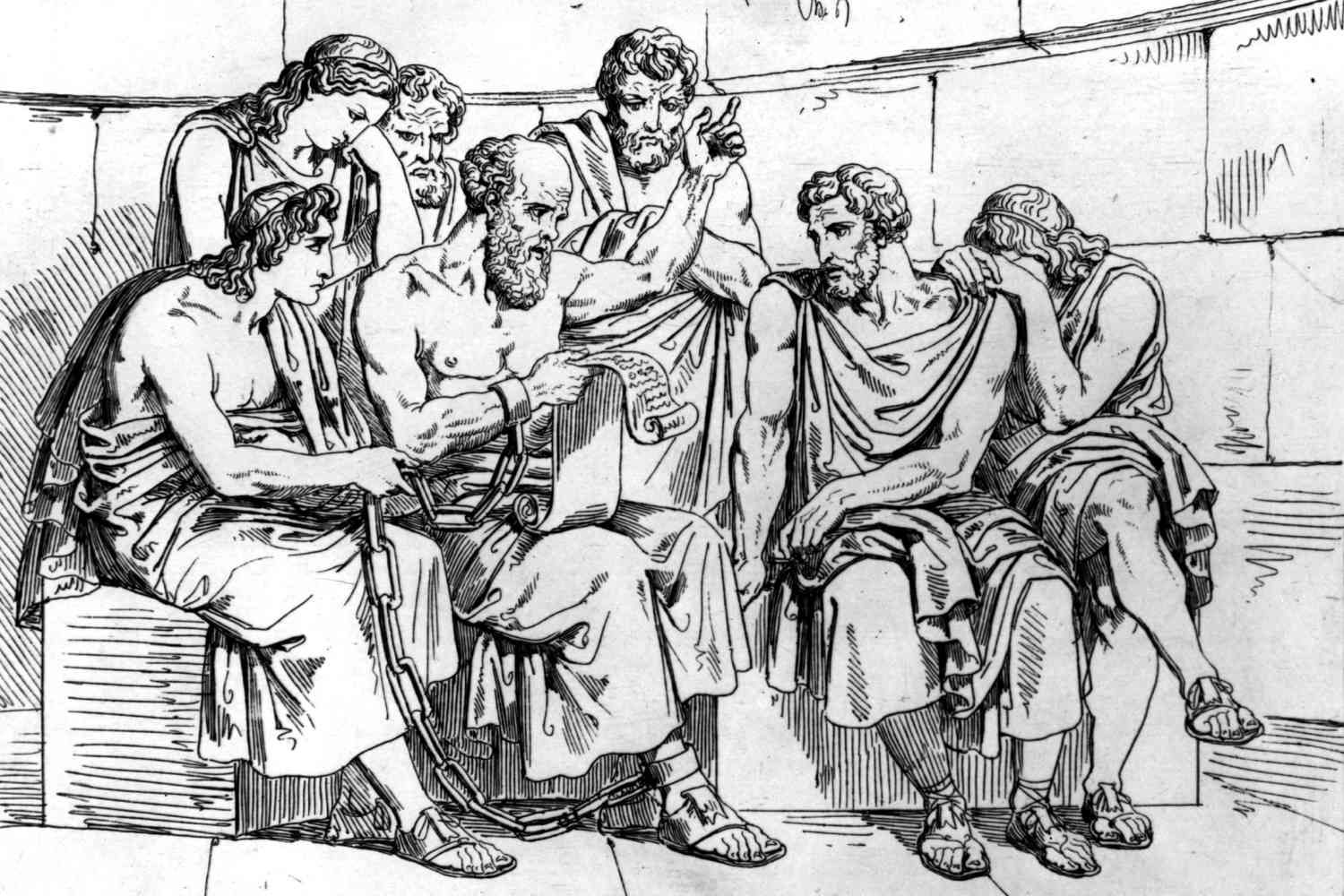
we don’t normally do a ‘caption this’…but as a result of a search for images: Socratic Method’ is this image. Seriously, who doesn’t want to magic marker the figure at the far-right, “Jesus Christ… enough with the ‘Let me ask you this…”
so, thanks again to the Comment section for a topic for the ‘mildest day of the (work)week’, Tuesday.
Specifically, Mimi for her Comment on yesterday’s Post:
It’s not a matter of wanting to change, or be like others, it’s a matter of being able to relate to them on their terms when needed, and it’s needed a lot.
All kidding aside, our Friend of the Doctrine points to the linchpin of the process of using the Doctrine as a tool, as opposed to a party trick.
New Reader Warning: The following is totally AP Doctrine Theory and Practice. Which means: check your work. You’ll be expected to grade your own test. More critically, and this applies to the implication of Point 2 below, while it is true that when it comes to the Wakefield Doctrine, ‘you can’t get it wrong’…. you totally can diminish the efficacy and value of it as a tool for your ownself.
Two things: three people? potentially three personal realities. three realities? three different manifestations of the same experience. three manifestations? three different forms of the message.
Fine.
But…but!! Being curated by a clark, one thing jumps out at us: a) we all have access to a trilingual dictionary and, with effort, practice and diligence can learn the native language of ‘the other two’ and; 2) if we are trying to translate what we hear them say into our native language, we are, perforce, confronted with the opportunity to look objectively at what ‘we think we mean.’ To/of thine ownself be learnin’
ten four, eleanor

 About clarkscottroger


I vaguely remember a quote from many years ago, something to the effect, I know you think you heard what you thought I said, but I’m not sure what you thought you heard is what I really meant!
yeah, I heard that one too!
lol