psychology of personality | the Wakefield Doctrine - Part 5 psychology of personality | the Wakefield Doctrine - Part 5

Monday -the Wakefield Doctrine-

Welcome to the Wakefield Doctrine (the theory of clarks, scotts and rogers)
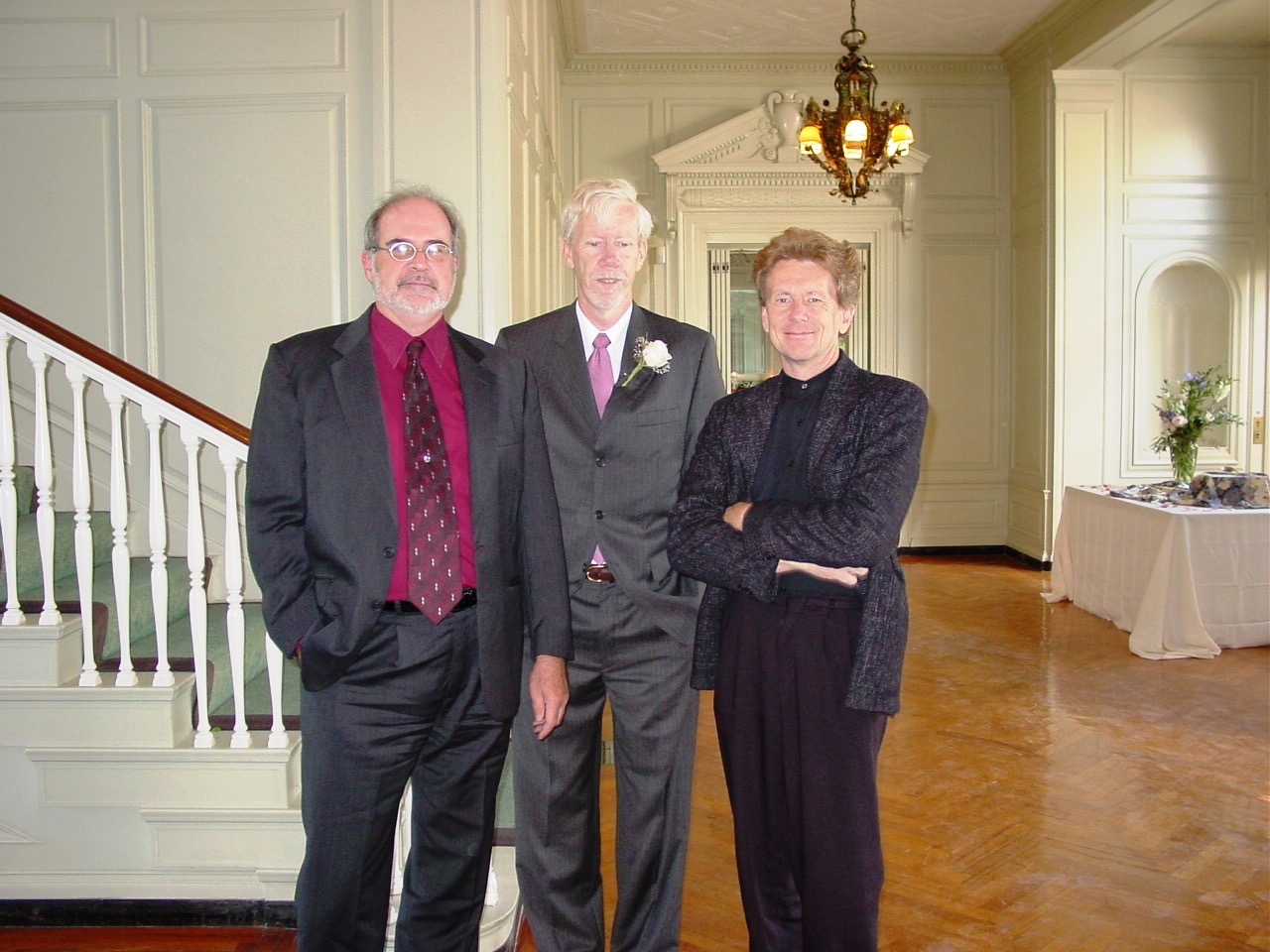
Let’s. borrow a topic of Good Reader, cai, who commented in a post where we suggested Readers try and identify the clark, the scott and the roger in our group portrait (above).

I’m guessing the Roger wore the traditional 3 piece suit with tie, with co-ordinating shirt-tie combo. Maybe the Scott didn’t wear a tie.

(To which we Replied):

close…

ProTip: set aside the choice of clothing for the moment, if your computer permits, blow up the photo until you can see each face in detail… look at the eyes in particular now, (we trust you’ve been keeping up with the assigned reading, lol) with the three predominant worldviews in mind, imagine what kind of world each of the three are observing…
the Doctrine is all about perspective
the challenge (and the fun) lies in putting yourself in another’s position and, setting your own views aside, try and see the world from their perspective… are they alert and focused as any predator monitoring their surroundings for prey or are they comfortable where they are, relaxed because they know everything is in it’s place or, are they abstract, distant, observing a strange alien world
lol
told you the Wakefield Doctrine was fun!

And it is!

Cai has taken an reasonable approach, i.e. the fashion choices of a(n) Outsider and a Predator and a Herd Member will not only be different, it will be indicative of the individual’s personal reality, aka predominant worldview.

ProTip: We can never repeat too frequently: the Wakefield Doctrine is gender, age and culture neutral. After all, people, the Doctrine is an alternative perspective on the reality experienced by lifeforms, living beings, not girls and boys, young and old, Mods and Rockers.

So, back to cai’s insights. We dress for success in our personal realities. And, with the forensic analysis* of choice of dress we can reverse percieve the predominant worldview of the individual.

So, good on you, cai. Considered the choices each of our subjects made (prior to appearing in the photo) and sought to infer their personality type.

As you read in our Reply. There are any number of ways to determine (to your own satisfaction**) which of ‘the three’ a person is. Since a fundamental principle of this here Doctrine here is, you can’t have too many perspectives’ knock yourself out.

But, and we’ll come back to Cynthia probably tomorrow with a post about secondary aspects, we’ll just say: if’n you want to explore additional and possibly more esoteric ways to see the world around you and the people who make it up, just send her a message. (or, additionally Denise or Mimi both total Doctrine savants.)

So, in closing, our suggestion: look at the expression on the faces of the three in photo above. They are projecting how they (are) relating to the not only the photographer but to the fact of their situation, i.e. where they are, what they are doing. In a sense, that is the simplest definition of the Wakefield Doctrine, a personality system predicated on one’s response to the reality in which they are born and must develop in.

outa time, yo


* just wanted to use the word ‘forensic’ lol

** since we’ve included one ‘can’t repeat too often’ saying why not another?  ‘No one has authority to establish the predominant worldview of another… at least not in the sense of , ‘Hey! You’re a clark. Get used to it‘ or ‘Accept that you’re a roger. You have our condolences.’ Sorry (not) but no one can impose their opinion on another when it comes to personal reality. (In fact, writing that makes us think there must be some cool, greco/roman sounding named rhetorical device. Say something like antanaclasisdismissus. lol




Share

Monday -the Wakefield Doctrine-

Welcome to the Wakefield Doctrine (the theory of clarks, scotts and roger)

gotta get fundamental here… we trust there will be comments that focus our vision so’s that original content appears. But, in the mean time.

…wait, hold on. mean time…mean time

(let us just paste this past post por favor… then back to that ‘jeez!-this-reprint-as-way-to-offset-writers-block-really-works’)

ok

from our friends at etymonline:  in part: …”As a noun, properly written as two words but commonly as one, after the adverb. In the mean space “meanwhile” was in use 16c.-18c. Middle English also had therewhile (adv., conj.) “during that time, meantime.

Therewhile! (Who the hell  sent the Memo: ‘We got our designation: ‘meanwhile’. It’s all you need to express a time period in brackets. sorta. Throw out the ‘Therewhile”.

Throw out the ‘therewhiles’ indeed! Such a superior and evocative way to describe an interval in time that you are too damn busy to take note of.

But, that’s not important now.

What is important is a)reinforcing the efficacy of distraction as a tool to overcome writers block and 2)to propose a topic for tomorrow’s post, to wit: How do the three predominant worldviews of the Wakefield Doctrine experience time. We will open the comment box for your input.

New Readers? The three predominant worldviews (sometimes referred to as ‘personality types’ but, if you don’t want to, like, get totally hazed on the campus of Doctrine U, don’t use that term. The term predominant worldview is intended to convey the idea that what others call personality types, we call: You come into rational consciousness (as an infant) and realize the world, the reality, around you is a reflection of you being: the Outsider, all ‘Why do you ask?’ or being assigned the life of the Predator ‘Sic em!’ or, with a gentle set of repetitions, you realize ‘You accept that you belong and as a Herd Member it is your right and duty to practice, preach and point out the blue monkeys in your world.’

damn! There’s your syllabus now read and comment!

M. -the Wakefield Doctrine- ‘sure, we all would like a hint how to use this Doctrine on the first day of the w. week’

Welcome to the Wakefield Doctrine (the theory of clarks, scotts and rogers)

Given that all you Readers are sitting in one of three worldviews as you read today’s Post, it’s only right that I make it clear which worldview I am talking about when I present a hint, isn’t it?

Well, actually no. It’s only right in the context of one of you. But that’s not important right now. Right at this moment, most of you Readers are at the start of your Monday, so on with the Doctrine hints:

  • clarks will be the ones most likely to get up early, followed by rogers and, (yeah, maybe a little surprising)…scotts are the last to rise and shine
  • clarks will be remarkably (and suspiciously) optimistic and talkative
  • rogers will not
  • scotts (who are still in bed) will begin to see that getting the other person back into bed is the best approach for everyone involved ( by ‘everyone’ we mean, of course, the scott)
  • clarks will look forward to the day the way that a person with a horrible toothache will look forward to going to the dentist
  • rogers will look forward to their day…in detail  with no need to share or express their concerns for the upcoming day
  • scotts will still be in bed
  • clarks sometimes feel anxiety about ‘the start of the day’  not necessarily the events that they anticipate happening, but rather, the point at which forward momentum begins
  • rogers will become more animated and energetic, but unless the other person is also in the same line of work, this brightening view of the coming day will remain inside their heads
  • scotts will (finally) get going… the least amount of preparation for the day of the three (consistent with their roles in the work day)
  • clarks and breakfast?  what, are you insane?!?!
  • rogers and breakfast?  well, we always have (fill in the blank precisely, please)
  • scotts and breakfast?  yeah sure… come on!  lets get going!!

That accounts for ‘our’ morning. I have every intention of returning to this here Post here at noon today and provide us with a look at the tipping point of the first day of the work week.  Unless you have a coment.

*

Share

Monday -the Wakefield Doctrine-

Welcome to the Wakefield Doctrine (the theory of clarks, scotts and rogers)

We thank Mimi for the theme for this Monday with her Comment

Cats — I’ve seen clark-like cats, they overthink. Then there’s Link Linker the Stinker, who is 12 and still thinks he’s a kitten, he’s a scott. Dansig the Round was our roger

Two aspects: aging and predominant worldviews as personal reality not just a set of habitual responses!

Aging. While it is (correctly) stated that ‘the Wakefield Doctrine is gender, culture and age neutral‘, the matter of how the Doctrine manifests as we grow older is one of special interest, given the demographic of our current readership.

In the simplest of terms: our predominant worldview becomes less nuanced. Hey, we haven’t used the Predator(scotts) in a illustration of late, so… with the encroachment of the years, we might observe a scott choosing to pounce after only two ‘Go on! I won’t eat you’ swipes of their metaphorical paws, to use Mimi’s example). Teeth and claws become dull and sometimes, missing. Experience can compensate, however their relationship to the world around them becomes less. …less exciting, less dynamic, less persuasive. (referring to all three predominant worldviews, of course).

Now, of late, (ha ha), we’ve come to appreciate the critical role a person’s secondary aspect plays in one’s life as the sands of the hourglass… sorry! flashback to old soap opera intro.

Anyway, as a person’s predominant worldview diminishes, it is inevitable that their secondary aspects become more prominent. So you see a scottian friend suddenly declaring that Antoine Fuqua ain’t got nothin’ on Ken Burns… you might be on solid ground that their secondary aspect is that of the Herd Member.

New Readers! This is not to suggest that one’s personal reality will shift from, in our example, the world of the Predator to the world of the roger. Remember, secondary (and tertiary) aspects reflect the un-actualized reality of the three ways of relating to the world, i.e. as an Outsider(clark), a Predator(a scott) or a Herd Member(roger).


Point two? The reality of personal reality. Will have to wait for another post because… (say it with us) ‘the time has come today’.


Thanks again to Friend of the Doctrine, Mimi, for the topic.

*

speaking of flashbacks, given the demographic of our target readership of today’s post, we offer a quintessential ’60s track


Share

Monday -the Wakefield Doctrine-

Welcome to the Wakefield Doctrine (the theory of clarks, scotts and rogers)

Hey, we’ve got ourselfs, courtsey of Avid Reader cai, a genuine Doctrine Monday Post topic!

To our Comment:

Yes. Experiencing change without our consent to accept change is like a natural calamity. The change is forced upon us.

There could be several ways to maintain desired change for self-improvement.

(1) The Wakefield Doctrine
(2) Make that change The Habit.

While the first (1) way is semi-self-explanatory, the second (2) is less so.

We know regular Readers of the Doctrine will catch sight of the grey oblong in a light square that is the total give-a-way of a blockquote, which, in turn, screams ‘RePrint’. Unfortunately this prompts our more Advanced Followers to sigh and say (quietly, barely moving their lips because….clarks!)

“Hey Curator-dude! We get the basic principles. And seeing how we’re either clarks or scotts/rogers with a strong secondary clarklike aspect, we can extrapolate. A little respect here. Maybe you’ve been writing too much fiction. This is not that. Fiction. This is simply an additional perspective on the world around us and the people who make it up. It’s ok to ‘tell’ and not ‘show’. We can, as is quite evident from cai’s Comment, extend the principles of the Doctrine to the business of self-improving ourselves.”

(damn! is this a case of meta, fourth-person POV?!!)

ok. we get it.

Two things about the Wakefield Doctrine and self-improvement:

  1. we all are born with the potential to relate to the world as do all three and, despite the fact that we relate as one (and only one) the capacity of the other two are always a part of us. Simply put: if you feel the need to do something about changing things in your life, know that the quality(s) you seek are not foreign, alien and/or something you have to ‘get’. Find your inner (clark/scott/roger) know that the ways of experiencing the world, although latent, are still yours. Learn about the three perspectives and let yourself see the world as they would experience it. And we can’t stress this enough: the Doctrine is about relationships (with the world). It is not about new information, cool skills, subtle abilities. No. It’s about: how we relate ourselves to the world around us and the people who make it up.     You can do this.
  2. Good point on ‘Habit’. Reality, from the Doctrine perspective, is mostly about energy. You put in, (and, very much, receive back), energy in every part of your reality. The ‘Problem with Change’ (the capital letter to denote a non-Doctrine approach to self-improvement) is that a ‘new thing’ in one’s life usually does not generate its own energy. Classic Example: lose a buncha lbs. Energy from ‘Look! I fit in these old clothes!’ is abundant …until it becomes commonplace. Less energy. Less ‘support’ for the new thing in your reality. cai’s insight is very perceptive. A habit, if actually formed, (not easy in it’s own right), becomes a real, self-supporting aspect of our reality. Kinda artificial, but as long as it provides a new source of energy for this new thing, it lasts.

Alright!

Original content(ish).

We’ll go ahead and leave the RePrint …wait. a. damn. minute!

Who said, ‘Sure, leave it. Who in their right mind (or sufficieny of self) throws out a perfectly good crutch.’

you’re right. thanks


QUICK NOTE: imagine you are an American actor. Very skilled, rather successful. Someone hands you a script. It is very, very detailed; character description down to where (the character grew up, all triumphs and trauma of childhood and adolescence. The character is an Wampanoag man/woman from the early 1600s.) If you’re still reading, you know where we are going with this. Strong secondary aspects notwithstanding, do not fall for the lie that you can, with enough practice, become a clark/scott/roger *whichever two are, for you, the other two”)

*

*

Share

TToT -the Wakefield Doctrine-

Welcome to the Wakefield Doctrine (the theory of clarks, scotts and rogers)

This is the Wakefield Doctrine’s weekly contribution to the Ten Things of Thankful (TToT) bloghop. Invented by the fictional step-daughter of CS Lewis on a dark and stormy afternoon in a basement garret in the village of East Overshoe in the Shire of Worcester in 1984, the TToT continues as one of the longest running grat ‘hops in the blogosphere. A part of the Listification School of Gratitational Philosophy and Mental Hygenics, the TToT requires but one thing from participants: a) a set of numerals at least to ten and 2) good intent. The list can be manifested in any manner the author is predisposed to offer,  including but not limited to words, photos, music, and/or a set of way-outdated cultural references, provided they are related to the inspiration (or aspiration (no, not respiration (ok, maybe that last, too))).

Following is our list of grats:

1) Phyllis

2) Una ‘A Chodsky Pes in Frankfurt’ (mid journey to the New World)

3) the Wakefield Doctrine

4) the Bridge project first carrying beam in place

5) the Six Sentence Story bloghop

6) the intent, at any rate, to document the construction of aforementioned Bridge project

7) second beam

8) something, something

9) ready for decking

10) Secret Rule. 1.3


music

*

*

*

*

You are invited to the Inlinkz link party!

Click here to enter

Share