“Sing a song of Sixpence, a pocket full of rye…” what is it about rogers and the Past? the Wakefield Doctrine pauses, reflects and offers you Pie*

Welcome to the Wakefield Doctrine ( the theory of clarks, scotts and rogers )

Sing a song of sixpence,
A pocket full of rye.
Four and twenty blackbirds,
Baked in a pie.*

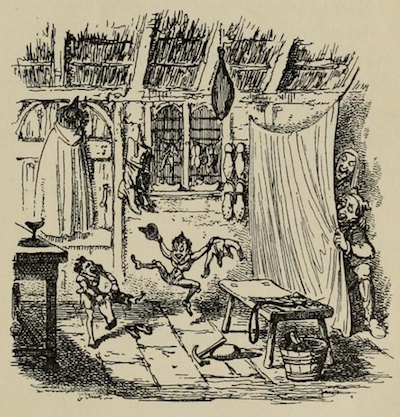
* Many interpretations have been placed on this rhyme. It is known that a 16th century amusement was to place live birds in a pie. An Italian cookbook from 1549 (translated into English in 1598) contained such a recipe: “to make pies so that birds may be alive in them and flie out when it is cut up” and this was referred to in a cook book of 1725 by John Nott.[1][2] The wedding of Marie de’ Medici and Henry IV of France in 1600 contains some interesting parallels. “The first surprise, though, came shortly before the starter—when the guests sat down, unfolded their napkins and saw songbirds fly out. The highlight of the meal were sherbets of milk and honey, which were created by Buontalenti.
( source: http://en.wikipedia.org/wiki/Sing_a_Song_of_Sixpence )

Well, didn’t they know how to have fun back in the 1600′s ? ( ” Hey, Ephesus!!  dude, yo  when her Majesty the Queen Mother sees the birds fly up from the table, she will surely impart a smile upon thee…dawg” )

Be that as it may, today we talk about the thing that rogers have for the Past.  Lets dispense with all the work of constructing a well-crafted narrative and get all Bullet Pointy on this bad boy! So, ‘The Past’ and the rogers? Welll…we’ll have you know that:

  • rogers live for the Past (as scotts live in the Present and clarks live for the Future)
  •  most ‘Historians’ are clarks and yet rogers are the people who you think of when you are interested in knowing something old, or out of date or archaic, what the hell!
  • the more involved the family tree, the more you need a roger, and not just because they love Yellow #2 Pencils**
  • in order to maintain a coherent history, you must have an internal consistency… rogers  love repeating patterns
  • the past is ‘a place’ that rogers know they can be alone and by themselves, at least for a little while
  • hey, it’s really rather simple! …the farther back in time a tradition or a practice or a dogma extends, the bigger the herd that has come to be associated with it and, like scotts…for rogers ‘more is more’! …following is the epitome of this ideal:
  • …Ken Burns…
This quality of the rogerian personality type is one of the most positive and essential, not only to the rogerian people, but to mankind as a whole. It has often been said that rogers are responsible for society and a (certain) continuity of civilization, without which we would all still be living on the savannah…darting down to the stream in the evenings nervously keeping one non-stereoscopic eye on the treeline, alert for the sudden movement of a scott!  As a matter of fact. I was talking to a rogerian friend, Valerie about the Doctrine and the positive contributions of her people to life and I put it this way, “Yes scotts are active and loquacious and really get things done, but would you want to fly across the country on a plane designed and built by a scott?”
I believe at that moment, Valerie understood and become proud of her people***
Tomorrow is Friday so get your ears out, it is Video Friday!!
YouTube Preview Image
** …and nice, clean, full-sized #2 Pencils! certainly not what you would find in your hands if you made the mistake of asking a scott for a pencil!! (think teeth-marks, stubby and prone to smudge)
*** which emotion, of course, was immediately transformed into a sense of  fervent righteousness and a total conviction of the deficiency of  all non-herd members


the Wakefield Doctrine, three personality types, self-improvement and questions, questions, questions!

Welcome to the Wakefield Doctrine ( the theory of clarks, scotts and rogers )

Yes, we do ‘have the weekend off’ but you know how it is… a self-improvement system as unique and effective and fun as the Wakefield Doctrine,  this stuff is not gonna type itself!
Speaking of ‘typing itself‘, most of the reason for today’s Post is the interesting effects on the Wakefield Doctrine being exerted by our newest FOTDs  Molly and Claire. Both people who came to us just last year, (and as predicted) they are people with an exceptional level of flexible intelligence‘ so they grasped the basic principles (of our little Doctrine),  straight off and have been making trouble ever since! But good trouble! By this we mean that they have questions, good questions, fun questions, aggravating questions, insightful questions and most of all, questions about aspects of the Wakefield Doctrine that we have not paid much attention to, at least up to now. To give you a better sense of what we mean by asking good, productive questions,  consider the two topics raised,  in the form of a well-intended question            ( …”oh clark, you know how you wrote that the Doctrine indicates…welll  I was just wondering”) …eeiyyeee!

Molly: ( during last week’s Saturday Night Drive ) …“Is is possible for a person to decide to change from one (predominant) type to another? Let’s say a person was a clark until they were about 12 or 13 and then decided to become a roger?”

Claire: (chatting on ‘the FaceBrick’)  ”..A quick – really quick – note on my part: this is probably the reason I bring my mini laptop at school when I know I have an hour recess and then write of what I observe (mostly the youngsters) and perhaps this might give us (at the doctrine) a thread to follow when it comes to these youngsters and others all over the world

Damn good questions!  Fortunately for us DS#1 and Ms AKH and the roger are around to see that these questions are converted from,  ”What? What do you need to know that for?!” to “that would be a totally interesting aspect of the Wakefield Doctrine to (further) explore and develop, when can you start?”

…so look for Posts over at the girlie and Three Personalities (‘KH’s place) as well as at Claire and Molly’s sites.

In the meantime, the briefest of Overviews on the aforementioned Questions:

  • the main line of inquiry for this Question was simply: what were the circumstances of the persons life surrounding the point of ‘switching’? The conversation (during the Drive) seemed to focus on trying to determine if this person was ‘a clark successfully acting like a roger’ or was this (now) ‘a roger who had spent their life up to that point as a clark?’ This question is central to one of the primary benefits of the Wakefield Doctrine, i.e. it’s use as a tool for self-development. Since we all retain the ‘capability’ to experience the world of the ‘other two’ personality types, the current thinking is that one should be able to have access to all of the strengths (and weaknesses!) of the two non-dominant personality types. This is, of course, the premier advantage of the Doctrine over most other systems for self development, i.e. to augment one’s personality as opposed to replacing one characteristic with another
  • in the realm of identifying the three personality types of the Wakefield Doctrine, Claire’s concern is quite useful in developing a higher level of skill (at this identification) than is required in day-to-day Doctrine uses. The ‘short list’ of characteristics by which you can infer the personality type of another person still applies: clarks: posture  scotts: eyes and rogers:  pronouns


YouTube Preview Image


YouTube Preview Image

Clarence and Immanuel and Sigmund walk into a bar… the Wakefield Doctrine ( “hey, this thing is for you, not for them!”)

Welcome to the Wakefield Doctrine ( the theory of clarks, scotts and rogers )

Given the hour of the day this is being written, we will do our best to kept the font small and punctuation slight.


Of the late, it seems the subject of these Posts is being drawn to a very fundamental, yet not clearly stated question; the answer to which speaks directly to the foundation upon which the Doctrine is built. The question is,  ”is the Wakefield Doctrine a psychology1 or is it a philosophy2?”

This is not as daunting a question as first it may seem. As we often encounter around here, the “correct” answer has a certain quality of ‘ambiguety‘ ( as a scott, sufficiently provoked might be heard to say). The difficulty answering this question is grounded in the fact that the Wakefield Doctrine is not an empirical, data-supported system of psychological premises nor is it a multi-sylabic, hyper-hypenated thought-cave of philosophical notions.

The Wakefield Doctrine is a unique, productive and fun approach to understanding the behavior of the people in our lives.
And it is pretty safe to say…the Harvard Deans3 with their psycho-analyzin’ and dramatize’ of rigorous systems would not be inclined to use the word “unique” in the Introduction of their books and you would be hard-pressed to find a Philosophy Professor, writing a Graduate Level Course description thinking,  ”…in this Course the class will be exploring the intricate  skein of thought and intentions, it’s fun too!”

So why the question in the first place?

Well, the thing of it is, the Wakefield Doctrine is based on the notion that, while we are all born with the potential, the capacity, the capability to live as a clark or a scott or a roger… it is not what we are, but where we are! (Stay with me, not as bad as it sounds).

For reasons not yet understood, we all exist in one of three ‘personal realities’, the characteristics of (these realities) correspond to the world of the clark and the world of a scott and the world of a roger:

  • in the first, an individual will find themselves cast in the role of the outsider, they observe the world and assume how things are meant to be, they live with others and try to understand and they act like clarks
  • in the second, we find ourselves in a landscape that is both incredibly full of life and yet is based on the ‘kill and/or be killed’ existence of the predator and prey, days are spent hunting food, avoiding being eaten and living as much as possible…the scotts
  • last of the three realities is the most plain and yet intricate; if you wake up in the world of a roger, you know that there are Rules and Guides, there is a place for everything and everything has it’s place

So what?  The thing the Doctrine says is this:

If you watch how a person behaves, you can infer which of the three ‘personal realities’ that person is living in and acting in and from this, you will know if they are a clark or a scott or a roger. You will know how this person will respond to virtually any situation. It is this understanding of the ‘worldview’ that the other person is responding to, that is the key to understanding their personality, not a list of adjectives attempting to describe their behavior and traits. Lets restate, just once more…
We are not clarks acting like ‘outsiders’, we are people who exist in a world in which our relationship to the world is that of the outsider.  We are not scotts because we are sexy and obnoxious in front of a crowd, we are normal people in an abnormal world. As rogers go through their day counting and cataloging, they do not say to themselves, “I am so good at this organizing thing’, they are simply doing what is natural for a person living in a reality that is based on the worldview of a herd”.

I hope this helps you get more from the Wakefield Doctrine.   Mr. Gatemouth?  …if you please!

YouTube Preview Image


1) Psychology is the study of the mind, partly via the study of behavior, grounded in science. Its immediate goal is to understand individuals and groups by both establishing general principles and researching specific cases. For many, the ultimate goal of psychology is to benefit society. In this field, a professional practitioner or researcher is called a psychologist, and can be classified as a social scientist, behavioral scientist, or cognitive scientist. Psychologists attempt to understand the role of mental functions in individual and social behavior, while also exploring the physiological and neurobiological processes that underlie certain functions and behaviors.         ( http://en.wikipedia.org/wiki/Psychology )

2) Philosophy is the study of general and fundamental problems, such as those connected with existence, knowledge, values, reason, mind, and language. Philosophy is distinguished from other ways of addressing such problems by its critical, generally systematic approach and its reliance on rational argument. The word “philosophy” comes from the Greek φιλοσοφία (philosophia), which literally means “love of wisdom”  (http://en.wikipedia.org/wiki/Philosophy )

3) ‘the Lady’…better ask a Progenitor (or DS#1) but if you attend the First Wakefield Doctrine Global Pic-a-Nic you would be allowed to hear her very words!

the Wakefield Doctrine’s three personality types….” I know I have seen them somewhere…I’ve got it! Fairy Tales!”

Welcome to the Wakefield Doctrine ( the theory of clarks, scotts and rogers )

Lets have some fun with this here Doctrine here.

You all are familiar with the characteristics of clarks, scotts and rogers, at least enough to recognize them in your close personal friends and/or family units, correct?1 (And), you have read here that the Doctrine is a unique and productive system of understanding the behavior of the people in our lives, right? The Wakefield Doctrine takes a unique approach to personality in that we say, “It is not the list of habits and self-descriptions that define and establish your personality ‘type’, no frickin way! Around here we say: “We all exist in one of three characteristic realities, and it is our appropriate and effective responses and reactions to the world, as we are perceiving and experiencing it, that determines if you are a clark or a scott or a roger. That lets you know which of the three personality types you are, then when you turn your attention (and the Doctrine) upon the people in your life you will learn so much about why they do the things that they do, that you will laugh and hurry to write us and tell everyone how useful this thing of ours can be; how you learn about the other person is as simple (but not easy) as the rest of the Wakefield Doctrine. What you want to do is observe the other person’s behavior and  infer the nature of the world they are experiencing“. That is what makes the Wakefield Doctrine unique and useful! This is true simply because if you allow that, say a clark exists in a world in which they are ‘natural outsiders’, then everything about the behavior of your clarklike friends makes so much more sense. You will not necessarily change how you feel about their lifestyle choices, but you will have a better understanding of the why to their behavior. The same applies to your scottian friends and your rogerian friends, of course.

For the purposes of today’s Post, we will think of Fairy Tales simply as Myths and Legends written for the masses. We do not lay claim, nor do we need to assert the requirement for an advanced understanding of the sociological, anthropological or any another -ogical in order to derive some understanding of the Wakefield Doctrine in the context of the tales that most children in most cultures at most times in the history of mankind are…exposed to. Lets just say, hey we all know about Little Red Riding Hood! Was she a scott or a roger or a clark? You know, like that!  ( Quick reminder! the Wakefield Doctrine is also culture neutral2, which simply means that despite the range of expression afforded individuals in any given culture, you can distinguish a clark from a scott from a roger. )

( ‘Hood’,  you’re up, yo)

The story revolves around a girl called Little Red Riding Hood, after the red hooded cape/cloak (in Perrault‘s fairytale) or simple cap (in the Grimms’ fairytale) she wears. The girl walks through the woods to deliver food to her sick grandmother.

A wolf wants to eat the girl but is afraid to do so in public. He approaches Little Red Riding Hood and she naïvely tells him where she is going. He suggests the girl pick some flowers, which she does. In the meantime, he goes to the grandmother’s house and gains entry by pretending to be the girl. He swallows the grandmother whole, and waits for the girl, disguised as the grandma.

When the girl arrives, she notices that her grandmother looks very strange. Little Red Riding Hood then says, “What big hands you have!” In most retellings, this colloquy eventually culminates with Little Red Riding Hood saying, “My, what big teeth you have!” to which the wolf replies, “The better to eat you with” and swallows her whole, too.

A hunter, however, comes to the rescue and cuts the wolf open. Little Red Riding Hood and her grandmother emerge unharmed. They fill the wolf’s body with heavy stones. The wolf awakens and tries to flee, but the stones cause him to collapse and die. (Sanitized versions of the story have the grandmother shut in the closet instead of eaten, and some have Little Red Riding Hood saved by the hunter as the wolf advances on her, rather than after she is eaten)

The tale makes the clearest contrast between the safe world of the village and the dangers of the forest, conventional antitheses that are essentially medieval, though no written versions are as old as that. The original was supposed to be a warning to young women about the sexual appetites of men (and the wolf-like qualities that they possess).  ( http://en.wikipedia.org/wiki/Little_Red_Riding_Hood )

Damn! topic complexity exceeding of credible scholastic credential for treating subject manner!! “Warning! Warning!! Danger, Will Robinson!! Danger!!”***

(Quick reference to one of the other popular Fairy Tales, as found in Western culture, at any rate… Ms. White!! take it home!)

The English translation of the definitive edition of the Grimms’ Kinder- und Hausmärchen (Berlin 1857), tale number 53, is the basis for the English translation by D. L. Ashliman.

Once upon a time as a queen sits sewing at her window, she pricks her finger on her needle and three drops of blood fall on the snow that had fallen on her ebony window frame. As she looks at the blood on the snow, she says to herself, “Oh, how I wish that I had a daughter that had skin white as snow, lips red as blood, and hair black as ebony”. Soon after that, the queen gives birth to a baby girl who has skin white as snow, lips red as blood, and hair black as ebony. They name her Princess Snow White. As soon as the child is born, the queen dies.

Soon after, the king takes a new wife, who is beautiful but also very vain. The new queen possesses a magical mirror, an animate object that answers any question, to whom she often asks: “Mirror, mirror on the wall / Who is the fairest of them all?” (in German “Spieglein, Spieglein, an der Wand / Wer ist die Schönste im ganzen Land?”; in Italian “Specchio, servo delle mie brame, chi è la più bella di tutto il reame?” ) to which the mirror always replies “You, my queen, are fairest of all.” But when Snow White reaches the age of seven, she becomes as beautiful as the day, and when the queen asks her mirror, it responds: “Queen, you are full fair, ’tis true, but Snow White is fairer than you.” Though in another version, the mirror simply replies: “Snow White is the fairest of them all.”

The queen becomes jealous, and orders a huntsman to take Snow White into the woods to be killed. She demands that the huntsman, as proof of killing Snow White, return with her lungs and her liver. The huntsman takes Snow White into the forest, but after raising his knife to stab her, he finds himself unable to kill her as he has fallen deeply in love with her. Instead, he lets her go, telling her to flee and hide from the Queen. He then brings the queen the lungs and the liver of a boar, which is prepared by the cook and eaten by the queen.

In the forest, Snow White discovers a tiny cottage belonging to a group of seven dwarves, where she rests. There, the dwarves take pity on her, saying “If you will keep house for us, and cook, make beds, wash, sew, and knit, and keep everything clean and orderly, then you can stay with us, and you shall have everything that you want.” They warn her to take care and let no one in when they are away delving in the mountains. Meanwhile, the Queen asks her mirror once again “Who’s the fairest of them all?”, and is horrified to learn that Snow White is not only alive and well and living with the dwarves, but is still the fairest of them all.

Three times the Queen disguises herself and visits the dwarves’ cottage while they are away during the day, trying to kill Snow White. First, disguised as a peddler, the Queen offers colorful stay-laces and laces Snow White up so tight that she faints, causing the Queen to leave her dead on the floor. However, Snow White is revived by the dwarves when they loosen the laces. Next, the Queen dresses as a different old woman and brushes Snow White’s hair with a poisoned comb. Snow White again collapses, but again is saved by the dwarves. Finally, the Queen makes a poisoned apple, and in the disguise of a farmer’s wife, offers it to Snow White. When she is hesitant to accept it, the Queen cuts the apple in half, eats the white part and gives the poisoned red part to Snow White. She eats the apple eagerly and immediately falls into a deep stupor. When the dwarves find her, they cannot revive her, and they place her in a glass coffin, assuming that she is dead.

Time passes, and a prince traveling through the land sees Snow White. He strides to her coffin. The prince is enchanted by her beauty and instantly falls in love with her. He begs the dwarves to let him have the coffin. The prince’s servants carry the coffin away. While doing so, they stumble on some roots and the movement causes the piece of poisoned apple to dislodge from Snow White’s throat, awakening her (in later adaptations of the tale, the prince kisses Snow White, which brings her back to life). The prince then declares his love for her and soon a wedding is planned.

The vain Queen, still believing that Snow White is dead, once again asks her mirror who is the fairest in the land, and yet again the mirror disappoints her by responding that “You, my queen, are fair; it is true. But the young queen is a thousand times fairer than you.”

Not knowing that this new queen was indeed her stepdaughter, she arrives at the wedding, and her heart fills with the deepest of dread when she realizes the truth. As punishment for her wicked ways, a pair of heated iron shoes are brought forth with tongs and placed before the Queen. She is then forced to step into the iron shoes and dance until she drops dead. (Other versions imply that she dies of a heart attack.)(?!  OMG! Lol) (  http://en.wikipedia.org/wiki/Snow_White  )

Lets apply the Wakefield Doctrine, aka the theory of clarks, scotts and rogers to these two popular myths/fables/cautionary tales/Emily Post Guides

The scotts?

The clarks?

Any rogers?

I think, given the late hour, rather than try for a full-on analysis, we will just give a hint: the Hunter Figure (in the LRRH…?)  I’m getting a pretty strong rogerian vibe…
Also, don’t forget as you pore over these tales, that there in nothing wrong with finding more than one of each of the three personality types within the same Fairy Tale. There may be 2 scotts or 3 rogers…that sort of thing.
We consider it to be part of the strength of the Wakefield Doctrine,  that we can infer personality types from various perspectives.
For example, we may see the obvious predatory nature of the Wolf (again in LRRH), but what about Riding Hood, her ownself? Is that innocence genuine or is is contrived? If the former, then maybe a clarklike female, if the latter, then you have to consider scottian female or (even) rogerian girl. But the real value in this exercise in applying the ‘lens’ of the Wakefield Doctrine to get comfortable with the concept of attempting to infer the world that another ‘person’ inhabits, on the basis of their actions and reactions and manner of dealing with a situation.

So have fun! Write us your Comments. Don’t be concerned if it seems that the topic is too big and/or unwieldy for the scope of this Post. This is just practice ‘spotting the clarks and the scotts and the rogers‘ out there!


YouTube Preview Image


1) If you are willing to say that you cannot, then we applaud your honesty and say, “Good Reader! Now get your ass over to this Page and read up on the Wakefield Doctrine and then go to the Page on clarks, and then the Page on scotts and finally stop at the Page on rogers. It won’t take long, 5 minutes per will do it. Then hurry back to the Post’”

2) the ‘also’ alludes to the fact that the Doctrine is also gender neutral

3) Lost in Space, of course! Probably should stick to TV shows and recent movies…more …within my ken, as they say.  (They do? Who the hell says, within your ken? What the hell does that even mean?)

…of personality types, behavior and inertia: the Wakefield Doctrine (theory of 3 personality types)

Wakefield Doctrine ( the theory of clarks, scotts and rogers )

Warning!! The thought supplanting1 today’s Post Title is more a framing of the question (and) description of the obstacle encountered (or to be encountered ) by all of us attempting to employ the Wakefield Doctrine as a system of self-improvement.  While the Post Title implies that there will be specific suggestions (composed of ways and strategies meant to over-come this inertia), if you don’t read exactly what you are hoping to find, please do one of two things:

  1. …keep reading. Read tomorrow’s Post and next week’s Post(s).  (Better yet), read some of the Pages of this blog, listed at the top of the page, these will contain most of the knowledge about personality types and behavior, as currently accepted by the Doctrine  (or),
  2. …write a Comment! If you are reading this, you are familiar, or at very least, conversant with the principles and precepts of the Wakefield Doctrine. Write a Comment, share with the other Readers what you have encountered in your own life as it pertains to the ‘the problem’ i.e. the inertia of old habits. We want to hear what you have experienced, good or bad, useful or useless. We all totally know that the better the understanding of ‘the problem’ the more likely the solution will be found.

So what is this ‘inertia of habits/behavior’?
Our elegant phrase, inertia of habits/behavior, is meant to describe the tendency to repeat what you have (repeated) previously. All people behave certain ways in certain (typical) life situations, (nothing new there). We also maintain the same types and styles of behavior over time ( in the parlance of the Wakefield Doctrine we are clarks or scotts or rogers). And we all have met with the same frustration when, for one reason or another, we have wanted to change our behavior.  You know that when you encounter a person who acts a certain way, lets say, for example they are too aggressive (or too non-aggressive), whatever. Despite your desire to change how you interact (with this type of person), despite your best efforts to alter your own responses to this person,  you invariably ‘forget’ and revert  to your typical style of response. This is the ‘inertia of habits/behavior’. Now some of you might say at this point, “Yeah well what do the physicists say? Huh?”,

Inertia is the resistance of any physical object to a change in its state of motion or rest, or the tendency of an object to resist any change in its motion. It is proportional to an object’s mass. The principle of inertia is one of the fundamental principles of classical physics which are used to describe the motion of matter and how it is affected by applied forces. Inertia comes from the Latin word, iners, meaning idle, or lazy. Isaac Newton defined inertia as his first law in his Philosophiæ Naturalis Principia Mathematica, which states:

The vis insita, or innate force of matter, is a power of resisting by which every body, as much as in it lies, endeavours to preserve its present state, whether it be of rest or of moving uniformly forward in a straight line.  (http://en.wikipedia.org/wiki/Inertia )
See?  Even the  rogers fear and/or respect inertia!
Since we are on the subject of rogers, it might be helpful to describe my experience with a new computer. I am currently typing away on the keyboard of my new iMac. This computer and (all other Apple products) are remarkable by virtue of the fact that they are clearly of a rogerian nature! By this I mean, when I first got the computer after years of PC’s (see inertia of habit/behavior, above); and after allowing for having to adjust to a different OS, I begin to notice a certain…rationale(?),  a view?, lets call it ‘the underlying premise of the experience of using a computer’, about the way the iMac was designed to function. The fricken design of these good-looking but aggravating computers is totally rogerian!
In terms of the topic of today’s Post? My new computer has a ‘spellcheck’ function as do most other brands, but there appears to be an enhancement to this handy writing aid that I don’t recall in my PCs. When I type a line,  the ‘correct’ word shows up right next to the word that I am either: 1) mistyping or b) making up a whole new word, for purposes that I am comfortable putting in place of a ‘real’ word.
Well, here on this rogerian computer, the ‘correct’ word will replace your ‘incorrect’ word, by default. You must go back and ‘force it’ (sometimes twice, if the new word is really weird) before it will  let you use the ‘incorrect word’.
Needless to say, that got me to thinking about how the  inertia of habits/personality may work within our lives. It is not that we ‘forget’ that we want to act differently, it is just that a part of us keeps track of how we have always behaved and if we divert from the norm, it will step in and superimpose the proper way to behave (or respond or react etc). Whether you want to or not. Now this, like spellcheck is very helpful and useful, it enables us to maintain continuity without constant distraction. And!…and maybe it (this process) is part of how it is that we can live in different realities! The three characteristic worldviews of clarks, scotts and rogers are apparently maintained and otherwise given continuity by this function of ‘supplying the correct word’ or in this case, ‘supplying the correct (for our individual personality type) interpretation of the reality that is our dominant worldview!  Damn! (this could be useful)!
We might then suggest that, much like the way we have to go back and ‘correct the correction’ we might develop strategies that allow us to, say for example, keep track of my clarklike style and anticipate where a scottian or rogerian response might be desired and beat that damn auto-correct at it’s own game! Clearly much work is necessary to refine the concept and create efficient and effective strategies.
Not quite the bullet point list! lol I know that some of you out there would like us to simply list the concise plan that will allow you to:
  • put on those high-heeled shoes and get those rogers to drop to all fours when you walk in the room (or)
  • find a secret way of actually having that scottian girl in psych class acknowledge that you sit behind her (and have for the last month) and maybe even be able to talk to her in way that doesn’t a) make you think you are reading from the wrong page of the Michelin Easy Phrases for the Tourist who really, really needs to use the bathroom and then order a Gourmet Dinner or b) have her reaching into her pocket for the speed dial on her cell phone (or even)
  • stop falling for the rogerian bullshit or the predatory groping of your scottian best friends… (hey, we’re not talking about you…these are true other rogers and scotts…heh heh
 Hey…I kinda hate to repeat myself with the song picks, but I have had this Alan Jackson song in my head all week, and it do have some fine pedal steel in it!
YouTube Preview Image
1) a modest and (hopefully ) successful attempt at a rogerian expression.

© 2009-2012 the Wakefield Doctrine All Rights Reserved -- Copyright notice by Blog Copyright